
Shopify vs WordPress: Which Platform is Best for eCommerce Websites in 2026?
Shopify vs WordPress Guide: When planning to build an online ecommerce website, one of the biggest questions is choosing the right platform. in this blog the comparison between Shopify (SAAS Based Platform) and WordPress (Free to use) has existed for years and many business owners still struggle to decide which one fits their needs.
There are other options available in the market for ecommerce website I.e NOP Commerce, Zoho Commerce, Squarespace, Wix Ecommerce, Dukaan App,
But here we are discussing about two big giants of ecommerce website building platforms, Both platforms power millions of websites but serve different purposes. Shopify is built mainly for eCommerce businesses that makes it easier to manage products, payments and orders. WordPress, which started as a blogging platform has evolved into a flexible system that can run almost any type of website including online stores, blogging websites, corporate websites, school websites etc. Many businesses also work with experienced Shopify partners like Appfinz Technologies to build fast, SEO friendly and scalable online ecommerce websites. In this guide, we will compare Shopify and WordPress to know which platform suits the business best.
What is Shopify?

Shopify is a SAAS based popular hosted eCommerce platform that serves businesses to create and manage an online store without dealing with complex technical setup. Instead of managing servers, hosting or security themselves, store owners can rely on Shopify’s built in infrastructure.
Because of its all in one ecosystem, Shopify handles important tasks like hosting, security updates, payment integrations and store management tools that allow businesses to focus more on selling products and growing their brand. Because of this simplicity, The Shopify has become a preferred platform for startups as well as growing eCommerce brands.
Today, more than 4 million online stores worldwide run on Shopify which makes it one of the leading platforms in the global eCommerce industry.Many businesses also work with experienced Shopify development partners like Appfinz Technologies to customize their stores, improve website speed and build scalable online shopping experiences.
How Shopify Works
Shopify operates as a Software as a Service or SaaS eCommerce platform where users subscribe to a monthly plan and get a complete system to build and run an online store.The platform provides all the essential tools needed to start selling products online without handling technical infrastructure.
The platform includes:
- Web hosting
- Store builder and customizable themes
- Payment gateway integration
- Product and inventory management
- Secure checkout system
Getting started with Shopify is fairly simple. A user creates an account, selects a store theme, adds products and the online store can be ready to launch.Since Shopify takes care of hosting, security and platform updates in the background, store owners usually do not have to worry about the technical side of things and can spend more time focusing on sales and customers.
Some businesses still prefer extra customization as their store grows.In such cases, they often collaborate with experienced Shopify partners like Appfinz who help refine store design, improve site speed and optimize the overall shopping experience.
Key Features of Shopify
Shopify is designed specifically for eCommerce businesses which is why it offers powerful tools to manage and grow an online store efficiently.
Some important features are:
- Built in shopping cart and secure checkout system
- Product and inventory management tools
- Mobile optimized and customizable store themes
- Integrated payment gateways for online payments
- Shopify App Store for additional features and integrations
- Multi channel selling through websites, social media and marketplaces
- POS (Point of Sale) system for retail stores
- Abandoned cart recovery to improve sales conversions
- Advanced analytics dashboard for store insights
With these features, businesses can manage products, track sales and sell across multiple channels from a single platform.Many companies also work with experienced Shopify development partners like Appfinz to further optimize their Shopify stores for better performance, SEO and customer experience.
Pros of Shopify
Shopify offers several advantages for businesses looking to build and manage a successful eCommerce website.
- Easy Setup: One of the biggest benefits of Shopify is its simple setup process. Businesses can launch an online store within a few hours even without technical or coding knowledge.
- Reliable Hosting: Shopify provides fully managed hosting which means the platform takes care of servers, uptime and website performance automatically. Store owners don’t need to worry about technical maintenance.
- Built in eCommerce Tools: Essential eCommerce features like checkout, payment processing, shipping options and tax calculations are already built into Shopify which makes it easier to start selling online quickly.
- Strong Security: Shopify ensures secure online transactions with SSL certificates, PCI compliance and automatic system updates also helping protect both businesses and customers.
- Scalable Infrastructure: Whether it is a small startup or a large brand, Shopify can scale easily as the business grows. Many companies also work with experienced Shopify development partners like Appfinz to further optimize their stores for performance, speed and advanced features.
Limitations of Shopify
While Shopify is a powerful eCommerce platform, it also has a few limitations that businesses should consider.
- Limited Customization: Shopify allows store customization through themes and apps but developers cannot fully control the entire system because it is a hosted platform.
- Transaction Fees: Additional transaction fees may apply when businesses use third party payment gateways instead of Shopify’s built in payment system.
- Limited Blogging Features: Although Shopify includes a built in blog, its publishing features are not as advanced as dedicated content management systems like WordPress.
- SEO Restrictions: Shopify is generally SEO friendly but certain URL structures and technical SEO elements have some limitations compared to fully customizable platforms.
- App Dependency: Many advanced features depend on apps from the Shopify App Store and some of these apps require monthly subscriptions which can increase overall costs.
However, experienced Shopify developers such as Appfinz often help businesses overcome these limitations by optimizing store design, improving performance and implementing the right apps efficiently.
What is WordPress?

WordPress is an open source content management system (CMS) used to build and manage websites.It started mainly as a blogging platform but over the years it has grown into a powerful system that can support many types of websites.Today, more than 40% of websites on the internet run on WordPress, including blogs, company websites and even online stores.
Unlike Shopify, WordPress is self hosted, which means website owners are responsible for choosing their own hosting provider and managing certain technical aspects.The advantage of this setup is flexibility users can customize almost every part of the website depending on their needs.
To turn a WordPress site into an eCommerce website, businesses usually install the WooCommerce plugin.This allows them to add products, manage orders and accept online payments.However, some businesses prefer an all in one platform like Shopify for simplicity and companies such as Appfinz often help brands build and optimize Shopify stores for smoother eCommerce operations.
How WordPress Works
To run a website on WordPress, a few basic components are needed:
- Web hosting server
- WordPress CMS installation
- Themes and plugins
First, users choose a hosting provider and install WordPress on the server.After that, they select a theme to design the website’s layout and use plugins to add extra features like contact forms, SEO tools or security settings.
If someone wants to create an online store, they can install the WooCommerce plugin. WooCommerce adds eCommerce features such as product listings, shopping carts and payment options.However, because WordPress requires separate hosting and plugin management, some businesses prefer simpler platforms like Shopify, where development teams such as Appfinz help businesses build and manage fully optimized online stores.
Key Features of WordPress
WordPress is known for its flexibility and customization options. It allows businesses and developers to create different types of websites from blogs to complex platforms.
Important features include:
- Open source platform with full control
- Thousands of themes for website design
- 60,000+ plugins to add extra features
- Complete design customization
- Advanced blogging and content tools
- Strong SEO customization options
- Support for custom development
- Multi-language website capabilities
Because of this flexibility, developers can build almost any type of website using WordPress. However, for businesses focused mainly on eCommerce stores, many prefer platforms like Shopify where agencies such as Appfinz help create optimized online stores.
Pros of WordPress
WordPress offers several advantages for website owners.
- Full Customization: Developers can modify almost every part of a WordPress website.
- Powerful Blogging System: Since WordPress started as a blogging platform, it provides advanced content and publishing tools.
- Large Plugin Ecosystem: With thousands of plugins available, users can easily add SEO tools, marketing features and automation.
- Strong SEO Control: WordPress allows full control over URLs, metadata, schema and page structure.
- No Platform Lock in: Because WordPress is open source, website owners have complete ownership and control of their site.
Limitations of WordPress
WordPress also has drawbacks.
- Requires Hosting: Users must manage servers, backups and updates.
- Security Responsibility: Security depends on plugins, hosting quality and maintenance.
- Plugin Conflicts: Too many plugins may create compatibility issues.
- Learning Curve: Beginners may need time to understand hosting and configuration.
Want to Scale Your Shopify Store & Increase Online Sales?
Work with Appfinz Technologies | Certified Shopify Partner. We build, optimize and scale high-converting Shopify stores.

Shopify vs WordPress: Core Differences
Understanding the Shopify vs WordPress comparison requires looking at key areas of website management.
- Ease of Use: Shopify is generally easier for beginners. It offers a guided setup, so users can launch an online store without technical knowledge. WordPress requires installing themes, plugins and configuring hosting which can take more time to learn.
Winner: Shopify
- Customization and Flexibility: WordPress offers greater customization.Developers can modify themes, plugins and even server configurations. Shopify allows customization but some areas are restricted and rely on its Liquid templating system. Many businesses work with experts like Appfinz to handle advanced Shopify customization.
Winner: WordPress
- Themes and Design: Shopify themes are mainly designed for eCommerce websites with around 200 themes in its store. WordPress offers thousands of themes across many industries which give more design flexibility.
Winner: WordPress
- Apps and Plugins: Shopify uses apps from the Shopify App Store and many require monthly subscriptions. WordPress provides thousands of plugins, many of which are free or low cost.
Winner: WordPress
- SEO Capabilities: In the Shopify vs WordPress SEO debate, WordPress offers more control over technical SEO elements such as URLs, metadata, schema markup and redirects. Shopify supports core SEO features but some advanced optimization may require apps.
Winner: WordPress
- Blogging Features: WordPress is stronger for blogging because of its advanced publishing tools and content structure. Shopify includes a blog feature but with fewer formatting and categorization options.
Winner: WordPress
- Security: Shopify manages security automatically, including SSL certificates, updates and server protection. With WordPress, security depends on the hosting provider and installed plugins.
Winner: Shopify
- Performance and Speed: Shopify uses optimized hosting and global infrastructure which helps maintain stable performance. Many agencies such as Appfinz also help businesses optimize Shopify store speed for better user experience. WordPress performance depends on the hosting quality and website optimization.
Winner: Shopify (for beginners)
- Maintenance Requirements: Shopify requires minimal maintenance since updates and hosting are managed by the platform. WordPress requires regular updates, backups and plugin management.
Winner: Shopify
Shopify vs WordPress Pricing Comparison
Understanding the pricing difference between Shopify vs WordPress means looking beyond the starting price. While both platforms can be used to build an eCommerce website, their overall cost structure works differently.
Many beginners only look at the initial price and forget about other expenses such as hosting, plugins, themes and maintenance. These additional costs can have a big impact on the total website budget over time.
Shopify Website Pricing and Costs
Shopify offers different pricing plans depending on the needs of an eCommerce store. Briefly described here.
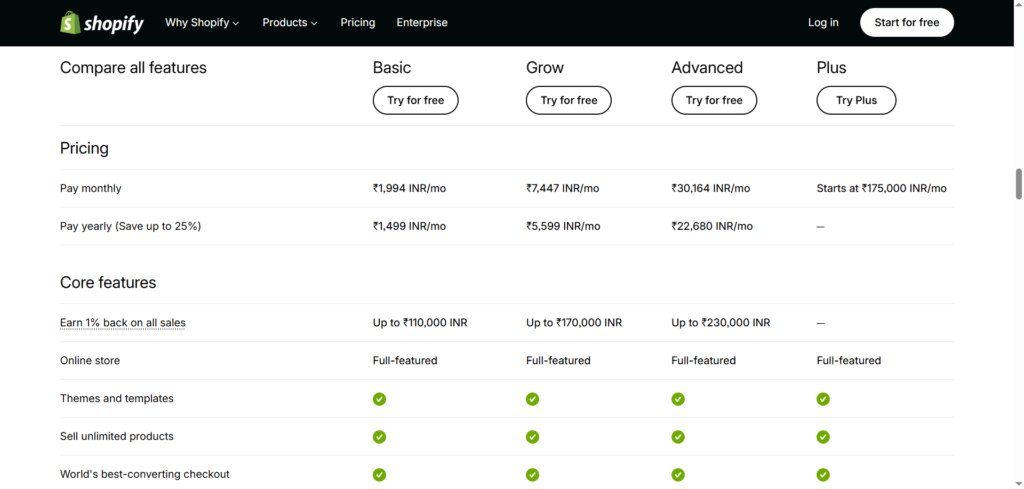
| Plan | Monthly Cost |
| Basic | ₹1,994 INR/Month |
| Shopify | ₹7,447 INR/Month |
| Advanced | ₹30,164 INR/Month |
However, there can be some additional costs such as:
- Paid apps : $10 to $100 per month
- Premium themes : $150 to $350 one time
- Transaction fees : up to 2% depending on the payment method
Because of these factors, the average monthly cost of running a Shopify store often falls between $80 and $250 that depends on the features and apps used. Many businesses also work with experienced Shopify partners like Appfinz to build and optimize their stores efficiently.
WordPress Costs
The WordPress software itself is free but running a WordPress website involves several additional expenses.
| Expense | Estimated Cost |
| Hosting | ₹899 to ₹1500 / Month |
| Domain | ₹1899 to ₹ 5000 / year |
| Premium Theme | ₹2500 to ₹ 8000 One time |
| Plugins | ₹ 0 to ₹5000 per year |
| Maintenance | Optional |
Hidden Cost Comparison
- Many Shopify stores rely on paid apps for extra features.
- Using several apps can increase the cost to $100 to $150 per month or more.
- WordPress offers many free plugins which can reduce initial costs.
- However, high traffic WordPress websites often require better hosting and premium plugins.
- The real cost difference between Shopify and WordPress depends on the store size, traffic and required features.
Shopify vs WordPress for SEO Performance and obstacles
SEO performance is important for generating long term organic traffic.When comparing Shopify vs WordPress SEO, several differences appear.
Technical SEO Control
- WordPress gives full control over technical SEO elements such as:
- robots.txt
- .htaccess
- structured data
- canonical tags
- Shopify limits some server level changes. But can be managed, if your development team is strong, a little bit tricky but not impossible, you can manage it on your own if you are aware of liquid porgramming.
Structured Data Capabilities
- WordPress allows full schema implementation using plugins or custom code.
- Shopify themes include basic schema but deeper customization can be limited.
Page Speed Optimization
- WordPress can achieve very fast speeds with optimized hosting and caching.
- Shopify offers stable performance through its managed infrastructure.Many businesses work with developers like Appfinz to further optimize Shopify store speed.
URL Structure Control
- WordPress allows complete customization of SEO friendly URLs.
- Shopify uses fixed structures such as:
- /products/
- /collections/
Blogging Power
- WordPress is stronger for content marketing and blogging with better content organization and categorization tools.
- Shopify includes blogging but with fewer advanced features.
SEO Plugins vs Built in Features
Popular WordPress SEO plugins include:
- Yoast SEO
- Rank Math
- All in One SEO
These tools provide advanced optimization features. Shopify also offers SEO apps but many require monthly subscriptions.
Winner: WordPress
Shopify vs WordPress for eCommerce
Both platforms support online stores but they work in different ways.
Product Management
- Shopify offers a simple and user friendly product management system.
- WordPress with WooCommerce allows deeper product customization and flexibility.
Payment Gateways
- Shopify supports many payment gateways but promotes Shopify Payments. Also you can opt-in Magic checkouts with shopify, Gokwik, Shopflow, Flexype, Razorpay Magic Checkout options available
- WooCommerce supports hundreds of payment integrations.
Checkout Experience
- Shopify provides a highly optimized checkout system designed for better conversions. As i mentioned you can opt in for magic checkout, it gives awesome checkout experience to the users.
- WooCommerce checkout can be customized but usually requires additional setup.
Conversion Optimization
- Shopify includes built in sales tools such as:
- Multi level discount codes
- Abandoned cart recovery
- Upselling features
- Cart Recovery, AOV increase encourage, Easy whatsapp API integrations
- WooCommerce often needs plugins for similar functionality.Many businesses work with experts like Appfinz to build conversion optimized Shopify stores.
Inventory Management
- Both Shopify and WordPress (WooCommerce) support inventory tracking and product variations.
International Selling
- Shopify includes built-in multi currency and international selling features.
- WooCommerce usually requires plugins for global selling.
Shopify vs WordPress for Beginners
Choosing between Shopify or WordPress often depends on the user’s experience level and website goals.
- Non Technical Users : Shopify is easier for beginners because hosting, security and updates are handled by the platform.
- Small Businesses : Shopify allows small businesses to launch an online store quickly without complex setup.
- Startups : Startups focused on product based businesses often prefer Shopify for its ready to use eCommerce features.Many brands also work with experts like Appfinz to build optimized Shopify stores.
- Bloggers : WordPress is usually better for content creators and bloggers because of its powerful publishing and blogging tools.
Shopify vs WordPress for Developers
Developers usually compare platforms based on control, flexibility and scalability.
API Access
- Both Shopify and WordPress provide APIs for integrations with external tools and services.
Customization Freedom
- WordPress offers complete backend customization.
- Shopify allows customization but restricts some core system modifications.
Code Control
- WordPress allows full access to PHP files and the database.
- Shopify mainly uses Liquid templating for customization.
Scalability in both platforms
- Both platforms can scale to support large online stores.
- However, WordPress scalability often depends on the quality of hosting and server infrastructure.
Real World Use Cases for wordpress and shopify
Understanding practical scenarios helps clarify the Shopify vs WordPress decision.
- Small Businesses : Shopify helps small stores launch quickly and start selling online.
- Service Businesses : WordPress works well for service based websites and business portfolios.
- Bloggers : WordPress remains one of the best platforms for blogging and content publishing.
- eCommerce Brands : Shopify is ideal for product focused online stores.Many businesses work with Shopify partners like Appfinz to build fast, conversion focused eCommerce websites.
- Agencies : Many agencies prefer WordPress because of its high flexibility and customization options.
- Enterprise Stores : Large brands may choose Shopify Plus or custom WordPress solutions that depend on their scalability and development needs.
Shopify vs WordPress: Pros and Cons Table
| Feature | Shopify | WordPress (WooCommerce) |
| Platform Type | SaaS (Hosted): Everything is managed on Shopify’s servers. | Open Source (Self Hosted): You must purchase your own hosting. |
| Setup Speed | Near Instant: You can go from sign-up to a live store in hours. | Moderate: Requires installation, theme setup and plugin configuration. |
| Maintenance | Hands off: Shopify handles security, updates and PCI compliance. | Manual: You are responsible for core, plugin and theme updates. |
| Customization | Guided: Limited by the theme engine and liquid code; very stable. | Unlimited: Full access to the database and code for bespoke builds. |
| Payment Fees | 0% if using Shopify Payments; 0.5% to 2% for 3rd party gateways. | 0% platform fees (only standard payment processor fees apply). |
| SEO Capabilities | Strong Out of the Box: Excellent speed and Core Web Vitals. | Elite: Total control over URL structure, schema and deep internal links. |
| Security | Level 1 PCI DSS: Certified secure and includes SSL out of the box. | User managed: Security depends on your hosting and security plugins. |
| Content | Basic: Good for simple updates but lacks advanced editorial tools. | World Class: The industry standard for complex content marketing. |
When You Should Choose Shopify
Shopify is a good choice when:
- You want to launch an online store quickly
- You have limited technical knowledge
- You prefer managed hosting and automatic updates
- Your business focuses mainly on selling products online
- You don’t want to handle security or server management
Because of its all in one eCommerce system,Shopify makes store management simple and efficient. Many businesses also work with Shopify partners like Appfinz to build and optimize their online stores.
When You Should Choose WordPress
WordPress works best when:
- SEO and content marketing are a major focus
- Your website needs custom features and functionality
- Blogging and content publishing are important for growth
- Developers require full control over the website
- Long term scalability and flexibility are priorities
Because of its open source structure, WordPress offers greater customization and development freedom for different types of websites.
Shopify vs WordPress: Final Verdict
The choice between Shopify and WordPress mainly depends on your business goals and website needs.
- Shopify focuses on simplicity and eCommerce convenience which makes it easier to launch and manage an online store.
- WordPress focuses more on flexibility, customization and strong SEO capabilities.
Choose Shopify if your goal is to launch an online store quickly with minimal technical effort. Many businesses also work with experienced Shopify partners like Appfinz to build fast and optimized eCommerce websites.
Choose WordPress if your strategy involves long term content growth, advanced SEO control and deeper customization.
Both platforms are powerful and can support successful online businesses when used correctly.
Frequently Asked Questions:
Is Shopify better than WordPress?
Shopify is usually better for beginners who want to build an online store quickly. WordPress offers greater flexibility, customization and SEO control.
Which platform is better for SEO?
WordPress generally provides stronger SEO capabilities because users have full control over technical SEO elements like URLs, metadata and schema.
Is WordPress cheaper than Shopify?
In many cases, WordPress can be cheaper, especially for small websites.However, the final cost depends on hosting, themes, plugins and maintenance.
Can WordPress handle large eCommerce stores?
Yes. With WooCommerce, WordPress can support large eCommerce websites, especially when backed by strong hosting infrastructure.
Can Shopify replace WordPress?
Shopify can replace WordPress for pure eCommerce stores. However, WordPress is still preferred for content heavy websites and blogging. Businesses looking to build optimized Shopify stores often work with experienced partners like Appfinz.
About Post Author
